
Introduction
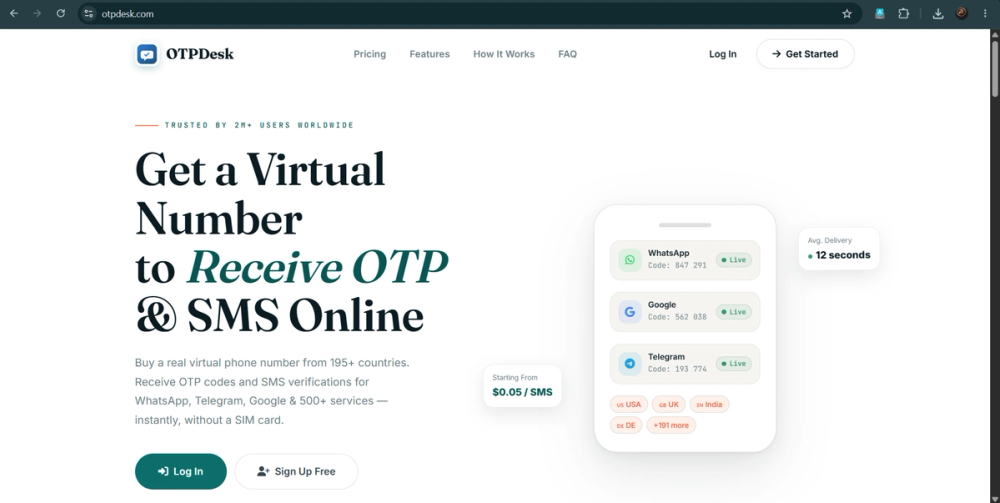
OTPDesk is an online service for buying temporary virtual phone numbers to receive OTP and SMS verification codes without a physical SIM. The public site advertises coverage in 195+ countries, compatibility with 500+ platforms (including WhatsApp, Telegram, and Google), per-use pricing from about $0.05, and crypto wallet top-ups. It may suit people who want to keep a personal number private during sign-ups, as well as developers exploring API-driven verification workflows.
Key Features
- Virtual numbers assigned quickly (the site cites under five seconds) with OTP delivery often within seconds on the dashboard.
- No SIM card required; numbers are described as real mobile options used entirely online.
- Service and country selection before purchase, with dynamic pricing visible on the pricing page.
- Support for 500+ verification targets named on the homepage, from messaging apps to social platforms.
- Cryptocurrency payments including USDT (TRC-20), TRX, and other listed coins for balance top-ups.
- Developer-oriented REST API to automate virtual number allocation and SMS retrieval.
- Guides linked for specific flows (for example WhatsApp and Telegram) plus a "receive SMS online" path.
- 24/7 support promoted via Telegram and email.
Use Cases
Privacy-minded users may rent a one-time number when an app demands SMS verification but they do not want their primary line on file. The site positions this for account registration across global services where country-specific numbers matter.
Small teams running multiple test accounts, regional onboarding checks, or staging environments might use disposable numbers instead of buying extra SIMs-provided their use complies with each platform's terms and OTPDesk's own acceptable-use rules. Developers building signup or anti-fraud flows can wire OTPDesk's API into backends that need programmatic SMS capture, though production compliance and rate limits should be validated directly with OTPDesk.
Pricing
OTPDesk emphasizes pay-per-use rather than mandatory subscriptions. Marketing copy cites virtual numbers from $0.05 per verification, with transparent, country- and service-specific rates on the pricing page ("dynamic pricing" for SMS verification servers). Users fund an account wallet-crypto is highlighted-then pay per number or verification attempt.
Exact prices shift by country and target service; the pricing page is the authoritative view before purchase. Refund rules for unused numbers or failed OTP delivery are not fully detailed in the fetched snippets beyond guidance to request a new code or contact support if SMS does not arrive within a few minutes.
User Experience and Support
The described flow is: create a free account (no credit card required on signup), add balance, pick service and country, receive the number, then read the OTP on the dashboard-marketed as under a minute end-to-end. If codes lag, the FAQ suggests retrying after a few minutes or opening a support ticket.
Telegram is presented as the fastest support channel, with email as an alternative. The site claims "real answers, not bots," but response SLAs are not specified. Platform-specific guides may reduce guesswork for popular apps.
Technical Details
OTPDesk offers a REST API for integrating virtual number provisioning and SMS verification into applications or internal tools. Numbers are consumed through the web dashboard for manual workflows.
Payment rails focus on cryptocurrency (USDT, TRX, others listed on the site). There is no emphasis on traditional card billing in the fetched homepage copy. Users automating via API should review authentication, rate limits, webhooks (if any), and data retention in official developer documentation-not all of which appeared in the crawled marketing pages.
Pros and Cons
Pros
- Broad country and platform coverage stated on the marketing site.
- Low advertised entry price per verification and no subscription requirement in main copy.
- Crypto top-ups appeal to users avoiding card-based billing.
- API option for developers automating SMS verification steps.
- Quick-assignment messaging and dashboard-based OTP viewing keep the workflow simple.
Cons
- Success rates can vary by country, carrier, and target app; some services block virtual-number ranges.
- Legal and terms-of-service constraints apply-OTPDesk explicitly prohibits fraud, spam, and illegal use.
- Pricing is dynamic; budgets need checking on the pricing page before each run.
- Dependence on third-party apps' SMS policies can change without notice.
- Enterprise-grade SLAs, compliance certifications, and detailed API docs were not prominent in the fetched pages.
FAQ
What is OTPDesk and what problem does it solve?
OTPDesk sells temporary virtual phone numbers online so users can receive SMS OTP codes without inserting a SIM. The site targets verification for hundreds of services while keeping a personal mobile number off the registration form.
Which apps and countries does OTPDesk support?
The homepage lists 500+ services (WhatsApp, Telegram, Google, Instagram, Facebook, TikTok, Tinder, and others) and 195+ countries including the USA, UK, India, Russia, and Germany. Availability for a specific pairing should be confirmed on the pricing or order UI before paying.
How much does OTPDesk cost?
The site advertises per-use pricing from about $0.05, with actual cost depending on service and country. Users preload a wallet-often via crypto-and spend balance per verification rather than on a flat monthly plan described on the main pages.
How fast do OTP codes arrive?
Marketing claims average delivery under 15-30 seconds, with most codes within 5-30 seconds. If nothing arrives within about three minutes, the FAQ suggests requesting a new code or contacting support.
Can developers integrate OTPDesk into software?
Yes. OTPDesk promotes a developer-friendly REST API to automate virtual number generation and SMS verification. Teams should read current API documentation for auth, endpoints, and acceptable automation use cases.
Is using a virtual number for OTP legal?
OTPDesk states that receiving OTPs via virtual numbers is legal in most countries for personal and business privacy use, but misuse for fraud or spam violates its terms. Users remain responsible for complying with local law and each app's policies.
Conclusion
OTPDesk is a virtual-number marketplace focused on fast SMS OTP capture, wide geographic coverage, crypto billing, and optional API automation. It fits privacy-conscious sign-ups and lightweight dev testing when pricing and platform compatibility are confirmed upfront. Visit otpdesk.com to browse services or check pricing for your country and app combination.