
Introduction
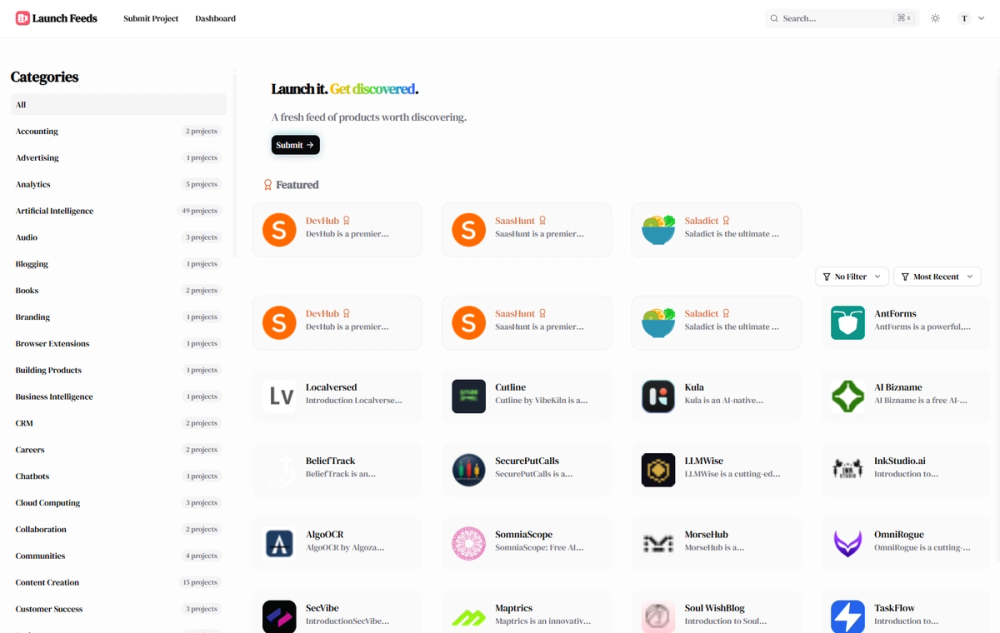
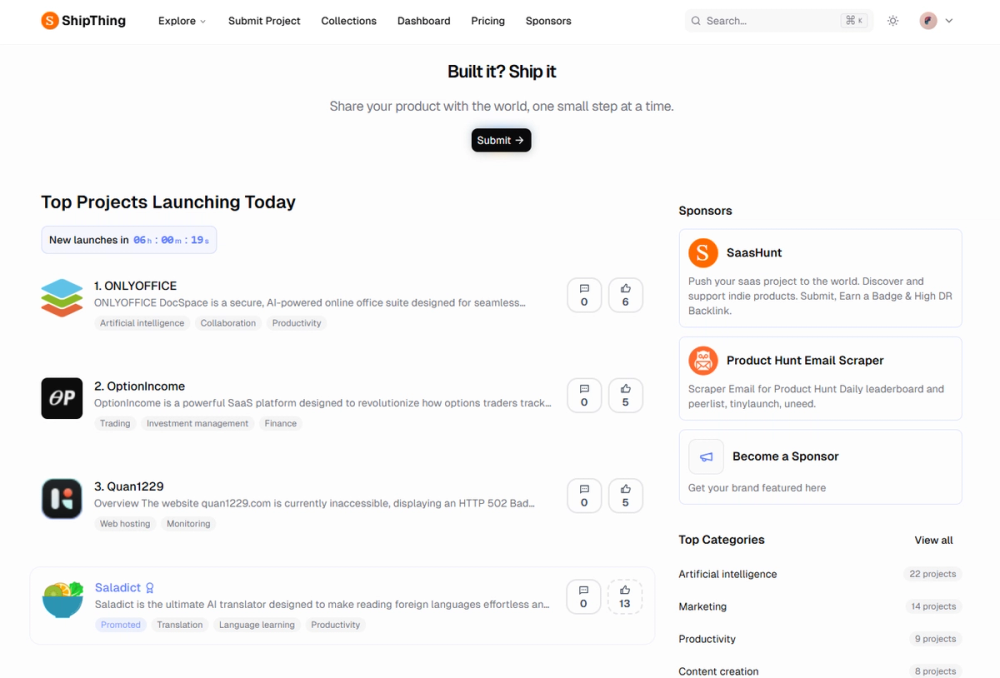
SmolHunt is presented as a platform to discover and upvote tech products, with a homepage that emphasizes daily launches, trending items, and indie-built products. The public page makes it clear that the site is built for people who want a fast view of what is new, what is getting attention, and what might be worth a closer look.
That puts it somewhere between a discovery feed and a launch showcase. The SmolHunt homepage suggests a useful fit for founders, early adopters, and product watchers who want a lighter, more curated entry point than a broad general-purpose directory.
Key Features
- Daily product discovery is a central theme, with "Top Projects Launching Today" and other time-based sections visible on the site.
- Product upvoting appears to be part of the platform's community layer, giving users a simple way to support items they like.
- Category browsing is present, so users can move beyond the main feed and explore products by type.
- The site includes product pages with descriptions, features, use cases, and pricing-style summaries, which makes it more informative than a bare listing page.
- A newsletter is visible, suggesting that users can follow launches instead of checking the site manually every day.
- The pricing page shows launch-plan options for featured visibility, including free and paid launch placements with different levels of exposure.
Use Cases
SmolHunt appears most useful for two groups: people looking for new tech products, and founders trying to get eyes on a launch. For discovery, the site gives readers a quick sense of what is trending today, what launched recently, and what categories are active.
For product makers, the platform seems designed to create early visibility rather than deep operational tooling. The launch-plan page suggests that a product can be featured more prominently, which may be useful if you want attention from an audience already browsing for new tools.
A practical caveat is that the value here depends on fit between your product and the site's audience. The public page clearly favors indie, SaaS, and maker-style launches, so teams selling to a broader or less technical audience should verify whether that audience is actually represented before relying on the platform for promotion.
Pricing
Browsing the site is free, but launch visibility is tiered. The pricing page shows a Free Launch at $0 per launch, a Premium Launch at $9 per launch, and a Premium Plus option at $12.5, with the page also referencing priority access, premium slots, and special homepage visibility.
The visible pricing model suggests that free access is meant for basic launch participation, while paid options buy more prominence. If you are comparing options, the main thing to verify is what each tier actually includes in terms of timing, placement, backlinks, and featured exposure, since those details are more important than the headline price alone.
User Experience and Support
SmolHunt's interface looks intentionally simple: browse launches, jump into categories, check the latest posts, and move on. That kind of layout should feel familiar to anyone who has used a product-discovery site before, and it keeps the learning curve low.
Support and help content are lighter than the launch pages themselves, but the site does expose blog and resource sections, plus social links and policy pages. If you expect hands-on onboarding or launch strategy help, it would be wise to verify what support comes with a paid launch before assuming it is included.
Technical Details
The site functions as a web-based discovery platform with product listings, category sections, newsletter signup, and launch-plan purchasing. The visible technical signals point more toward a content and visibility marketplace than a deeply technical SaaS backend exposed to users.
The pricing page also references dofollow backlinks, weekly newsletter placement, and X promotion triggers tied to ranking. Those mechanics suggest the product is trying to combine discovery with distribution, but readers should check the exact conditions because the public page does not fully spell out every rule in a single place.
Pros and Cons
Pros
- Easy to understand: the site's focus on launches, categories, and rankings is clear at a glance.
- Useful for indie and SaaS discovery, especially if you want to track smaller products.
- Free browsing lowers the barrier for casual users.
- Paid launch options offer extra visibility for founders who want more than a basic listing.
Cons
- The audience looks niche, so it may not be the right fit for every product category.
- Launch-plan details are visible, but the full mechanics of exposure and backlink eligibility still need verification.
- Support information is not as prominent as the listing and pricing content.
- If you want a deep community or review layer, the site appears lighter than some broader discovery platforms.
FAQ
What is SmolHunt, in plain terms?
SmolHunt is a tech product discovery site where users can browse launches, upvote products, and look at what is trending today. The site also gives founders a way to buy launch visibility through paid and free launch options.
Who is SmolHunt most useful for?
It appears most useful for indie founders, SaaS builders, and people who like discovering early-stage tech products. The public page strongly leans toward small products and launch-day visibility rather than broad enterprise software coverage.
What can I actually do on SmolHunt as a visitor?
You can browse launches, filter by categories, explore product pages, and upvote items. The site also surfaces collections, recent launches, and newsletters, so it works as a lightweight discovery feed.
How does SmolHunt pricing work for launches?
The pricing page shows a free launch option and paid launch tiers with more visibility. If you are planning to submit a product, the key thing to verify is what each tier includes in terms of placement, timing, and promotional extras.
Does SmolHunt look like a good fit for B2B or niche SaaS products?
Probably, but with a qualifier: the site's examples and language suggest a strong indie and SaaS focus. Before relying on it, founders should check whether the audience and categories match their product and target buyer.
What should I check before paying for a launch plan?
Verify the launch timing, whether you qualify for dofollow backlink placement, and what visibility comes with each tier. Those details matter more than the launch price itself because the outcomes depend on ranking, scheduling, and promotion rules.
Is SmolHunt only for launching, or is it also useful for research?
It seems useful for both. Visitors can use it for product discovery, while founders can use it for launch visibility and traffic. The combination makes it more practical than a one-way submission page.
Conclusion
SmolHunt looks like a straightforward discovery and launch platform for small tech products, with enough structure to be useful for both readers and founders. The strongest reasons to consider it are the simple browsing experience, the daily-launch format, and the visible launch-plan options on the pricing page.