
DevKit.best
Introduction
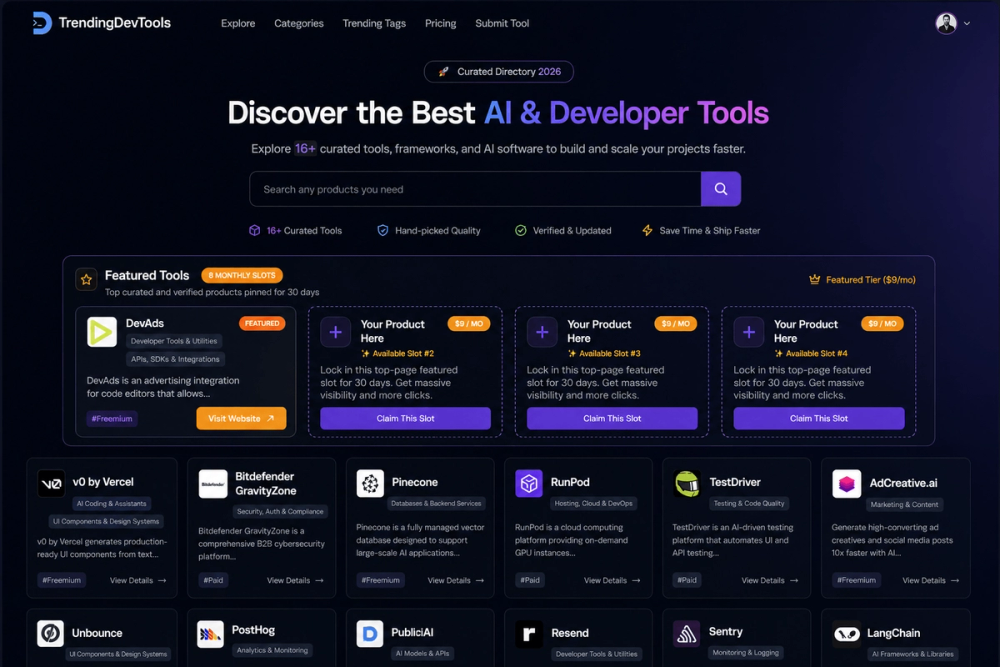
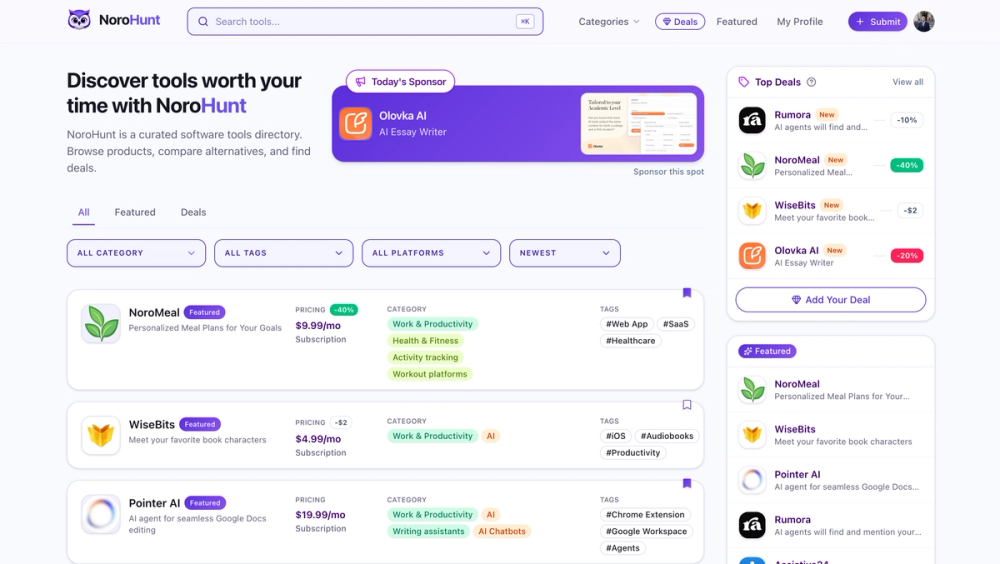
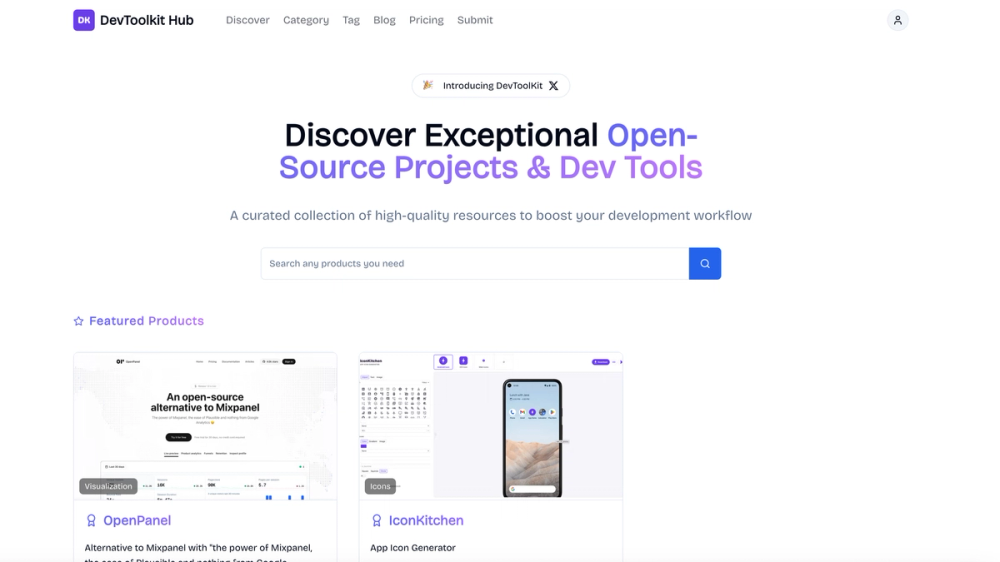
DevKit.best is a curated directory focused on AI coding tools, GitHub Copilot alternatives, and open-source projects designed to boost developer productivity. The platform serves as a discovery hub for developers seeking the latest tools in the development ecosystem, featuring a collection of featured products across categories including screen recording, CLI tooling, web frameworks, email delivery, and AI-powered development assistants.
Key Features
Curated Product Discovery: DevKit.best maintains a curated collection of AI coding tools and open-source projects, with featured products prominently displayed on the platform.
Product Categories: The directory organizes tools into searchable categories, enabling developers to find solutions by technology type or use case.
Tag-Based Filtering: Users can explore products through tag-based navigation to discover tools matching specific technologies or features.
Live Pulse: The platform includes a live pulse feature showing current activity and trending tools in the ecosystem.
Newsletter Subscription: Users can subscribe to a newsletter for the latest news and updates about featured products and directory additions.
Product Search: The platform includes search functionality for finding specific tools within the directory.
Free Submission: Developers can submit their tools to the directory for consideration.
Featured Products: The directory highlights selected products including Cap, Better-T-Stack, Biome, Elysia, Resend, React Flow, LinkedIn Formatter, and Jotlin.
Use Cases
Developer Tool Discovery: Developers use DevKit.best to discover new AI coding tools, open-source projects, and alternatives to popular tools like GitHub Copilot.
Technology Research: Teams researching technology stacks explore the directory to evaluate tools for specific needs such as screen recording, email delivery, ORM selection, and UI component libraries.
Open Source Exploration: Developers interested in open-source projects browse the directory to find actively maintained tools with community support.
Productivity Enhancement: Individual developers seek tools to improve their workflow efficiency, from CLI scaffolding tools to code formatting and linting solutions.
Framework Evaluation: Teams evaluate web frameworks like Elysia for TypeScript development or React Flow for node-based editor interfaces.
Email Infrastructure Research: Developers exploring email delivery platforms discover tools like Resend for transactional and marketing email services.
UI Component Sourcing: Frontend developers find production-ready UI blocks and accessible component libraries for landing pages, dashboards, and web applications.
Pricing
Specific pricing information for DevKit.best directory access is not clearly exposed on the public site. The platform appears to offer free browsing and discovery. Tool submissions are marked as free. Individual featured products have their own pricing structures. The LinkedIn Formatter tool is explicitly listed as free.
User Experience and Support
DevKit.best provides a navigation-based interface with sign-in capabilities for user accounts. The platform includes standard legal documentation such as Privacy Policy and Terms of Service. Users can engage with the community through newsletter subscriptions and social media channels including X (Twitter), Product Hunt, and GitHub. The directory structure supports exploration through Categories and Tags. A blog and resources section provides additional content. The platform includes theme toggling capabilities for user preference. The site is built by zjy365 and includes copyright through 2026.
Technical Details
DevKit.best is built as a curated directory platform featuring development tools and open-source projects. The platform integrates with GitHub for project discovery and community engagement. Featured products include Cap (open-source screen recording with AI features), Better-T-Stack (CLI tool for TypeScript project scaffolding), Biome (unified toolchain for web development), Elysia (TypeScript web framework optimized for Bun), Resend (email delivery platform with React-based templates), React Flow (React library for node-based editors), LinkedIn Formatter (Unicode text formatting tool), and Jotlin (AI-powered requirements engineering assistant). The directory focuses on TypeScript/JavaScript ecosystem tools, modern web frameworks, ORM solutions, and AI-powered development assistants.
Pros
- Curated selection of AI coding tools and open-source projects
- Free tool submission for developers
- Newsletter subscription for updates
- Category and tag-based filtering
- Search functionality for tool discovery
- Live pulse showing ecosystem activity
- Integration with GitHub, X (Twitter), and Product Hunt
- Theme toggling for user preference
- Focus on modern development tools and frameworks
- Free tools available (e.g., LinkedIn Formatter)
Cons
- Specific pricing for featured products not detailed on directory site
- Limited information about submission criteria or review process
- No visible user review or rating system
- No information about API access or data exports
- Limited details about editorial selection criteria
- User account features beyond sign-in not clearly exposed
- No visible information about traffic metrics or audience size
- No clear information about content moderation policies
- Directory scope limited to curated selections rather than comprehensive listings
Conclusion
DevKit.best offers a focused approach to developer tool discovery through curated selections of AI coding tools and open-source projects. The platform serves developers seeking alternatives to popular tools like GitHub Copilot and those exploring modern TypeScript/JavaScript ecosystem solutions. With featured products spanning screen recording, CLI tooling, web frameworks, email delivery, and AI assistants, the directory covers key areas of modern development workflows. The free submission model encourages community participation, while the newsletter and social integrations keep users informed about new additions. Developers considering the platform for tool discovery should evaluate whether the curated approach aligns with their needs compared to more comprehensive directories, and verify current information directly with featured product providers.